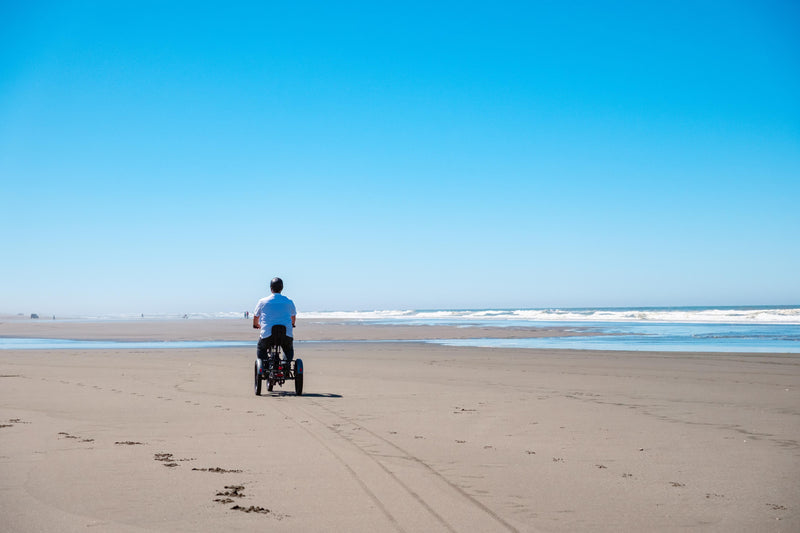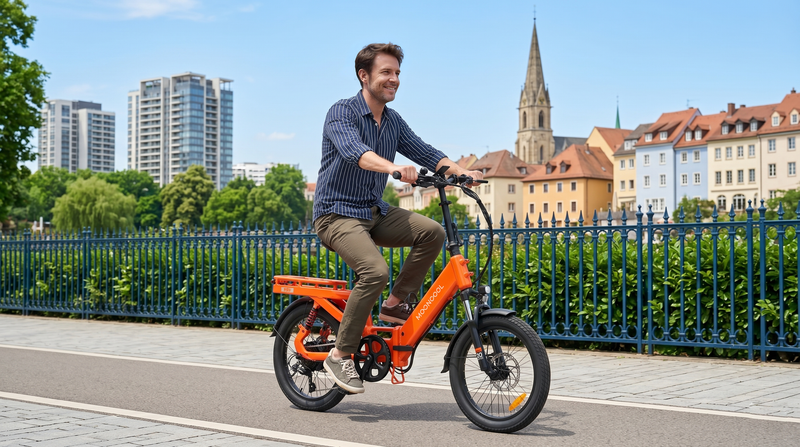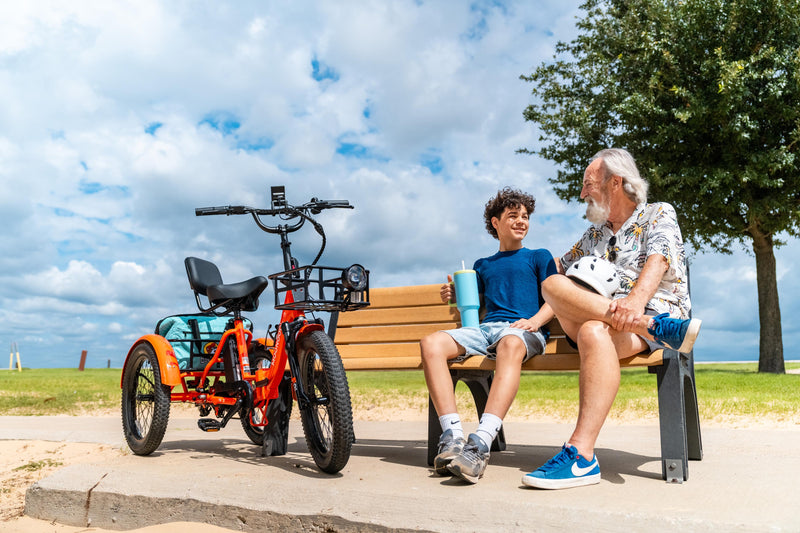


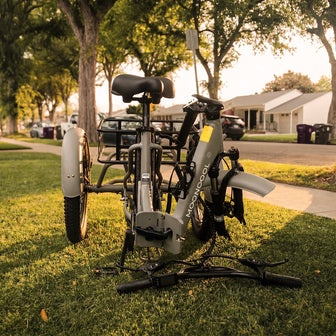
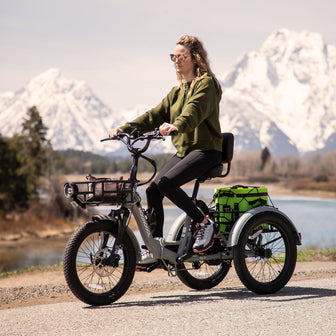
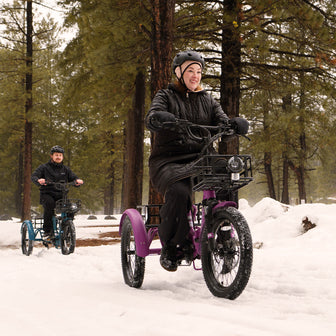
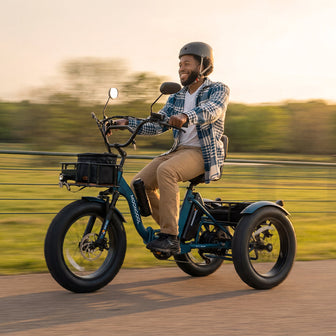
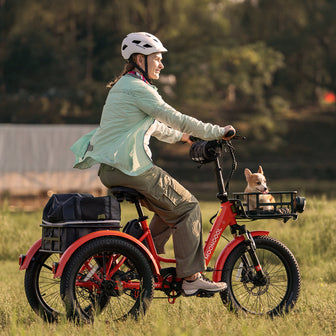

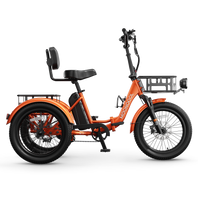
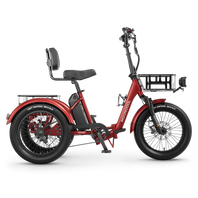
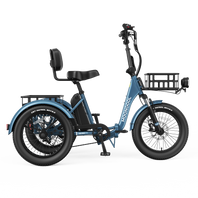
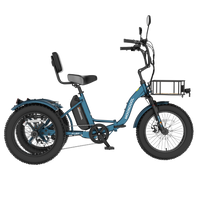
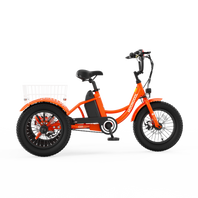






The most important characteristics of an electric trike are stability and user-friendliness. The Mooncool TK2 has been designed to provide both using innovative technology that you won’t find on anything else at this price point. Let’s go into how Mooncool has made the TK2 safe and easy to use.
Powertrain and Efficiency
We will start with the TK2’s motor. It has a 48V 500W helical-gear motor with a peak output of 1092W and 65Nm of peak torque. The advantages of a helical-gear motor are that it is quieter and more efficient than a standard straight-cut gear motor. This is because the teeth engage gradually rather than all at once. The result of this design is less noise, less vibration, and more of the battery’s energy going to the wheel rather than being lost as heat.
How much torque a motor has affects its ability to climb hills. The TK2 has 65 Nm of torque, which is pretty good for a trike in this price range. Lower-torque motors start to feel labored and slow down when you’re riding uphill, but the TK2 keeps climbing with confidence. Riders carrying groceries, hauling gear to a campsite, or riding rolling terrain will notice the difference.
The Sine Wave FOC controller manages that power delivery. FOC stands for Field Oriented Control, and it’s the same technology used in high-end e-bikes to keep power ramps smooth and linear. When you start pedaling or twist the throttle, the assistance builds gradually rather than kicking in with a shove. After a few rides, it stops feeling like a motor assisting you and starts feeling like you’re just stronger than usual.
Battery-wise, the TK2 has a 48V 15Ah battery with 21700 lithium cells. The 21700 format is larger than the 18650 cells used in budget trikes. This means it can store more energy per cell and maintain its capacity over hundreds of charge cycles. So the range you get on day one should still be close to what you get two or three years down the line. The stated range is 35 to 60 miles per charge. If you are lightweight and ride on flat ground in a lower assistance mode, you’ll be near the top of that. Hillier terrain with a full load on a higher setting brings the range down, but that is to be expected. Most riders will see a range somewhere in the middle, which is still plenty for a full day out.
The battery is removable, too. All you need to do is take it out, bring it inside, and charge it from any standard 110-240V outlet. A full charge takes 7 to 9 hours, so you can plug it in overnight and have it ready for your morning ride. You don’t need a power socket anywhere near where the trike is stored, which makes life easier if you keep it in a garage or shed.

Superior Handling: The Differential
If you’ve only ever ridden a trike with a locked rear axle, the first time you corner on a trike with a differential is a bit of a revelation.
Here’s the problem a locked axle creates. When you go around a corner, the outside rear wheel has to travel a longer arc than the inside one. On a bike, that’s not an issue because the rear wheel just follows the front. But on a trike with two rear wheels locked together, one of them has to drag or skip to compensate. On smooth pavement at low speed, you might not notice it much. On gravel, a slight camber, or through a tighter turn, it makes the trike feel skittish and hard to place accurately.
The TK2’s rear speed differential solves this by letting each wheel rotate at its own speed. The outer wheel covers more ground through the turn, the inner wheel covers less, and the whole trike tracks cleanly through the corner without either wheel fighting the other. It’s the same principle that makes a car handle predictably, and it works just as well on a trike. You feel it most when you’re carrying weight in the rear baskets or riding on anything other than perfectly smooth tarmac, and once you’ve ridden with it, a locked-axle trike feels noticeably crude by comparison.
Most electric trikes at this price point don’t have a rear differential. On the TK2, it’s standard.
Stopping Power and Smart Display
Hydraulic disc brakes with 180mm rotors are fitted as standard on the TK2, and if you’ve only ever used mechanical disc brakes, the difference is something you notice on the first stop. Hydraulic systems use fluid to transfer braking force rather than a cable, which means the lever action is lighter and the braking force is stronger. You don’t need to grip hard to get a confident bite, which is a real benefit for anyone with limited hand strength or arthritis.
Both levers also have an electrical cut-off function built in. The moment you touch a lever, the motor cuts power completely. So when you brake, you’re working with the motor switched off rather than pushing against it. This means the braking feels natural and predictable on a gentle downhill or when slowing for a junction. Also, the trike responds the way you’d expect, rather than requiring you to pull the levers hard to overcome the motor’s resistance.

The TK2’s display is a 3.5-inch full-color TFT screen, rated at up to 1,500 nits and IPX5 waterproof. At $1,499.99, a trike with a display that bright is not something you see often. On a sunny afternoon, most budget trike displays become difficult to read. This one doesn’t. Speed, battery level, assist mode, and distance are all visible at a glance, and the screen handles rain without issue.
Final Thoughts: Unbeatable Value at $1,499.99
A helical motor, FOC controller, 21700 battery cells, a rear speed differential, hydraulic disc brakes with motor cut-off, and a 1,500-nit waterproof display. Each of those is a deliberate engineering choice, and together they explain why the TK2 rides the way it does. At $1,499.99, it’s a lot of trike for the money. Check the full spec list on the Mooncool TK2 page, or take a look at the rest of the Mooncool electric trike lineup if you want to see how it compares to the other models.