

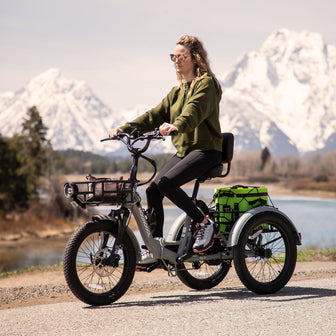
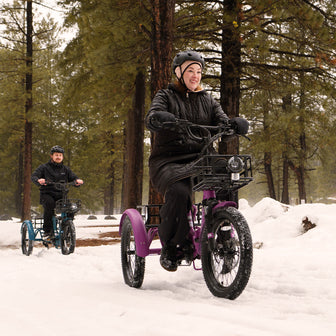
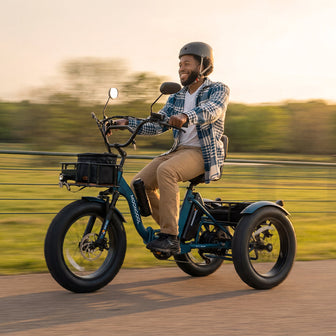
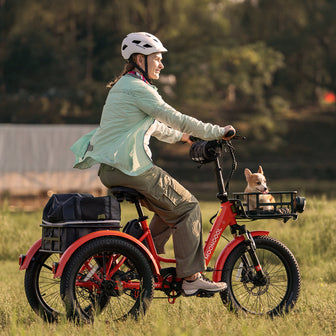
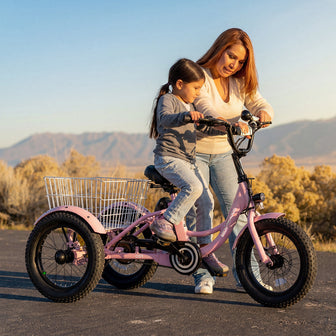






If you’ve been shopping for an electric trike recently, you’ve probably noticed that fat tire models are becoming more common. The tires are hard to miss. They’re wide, chunky, and look like they belong on something much more rugged than a trike you’d ride to the store. But there’s a good reason they exist, and understanding what those tires actually do makes it a lot easier to work out whether a fat tire electric trike is the right choice for you.
Here’s a look at what fat tires are, what they do differently, and who they’re built for.
What Is a Fat Tire Electric Trike?
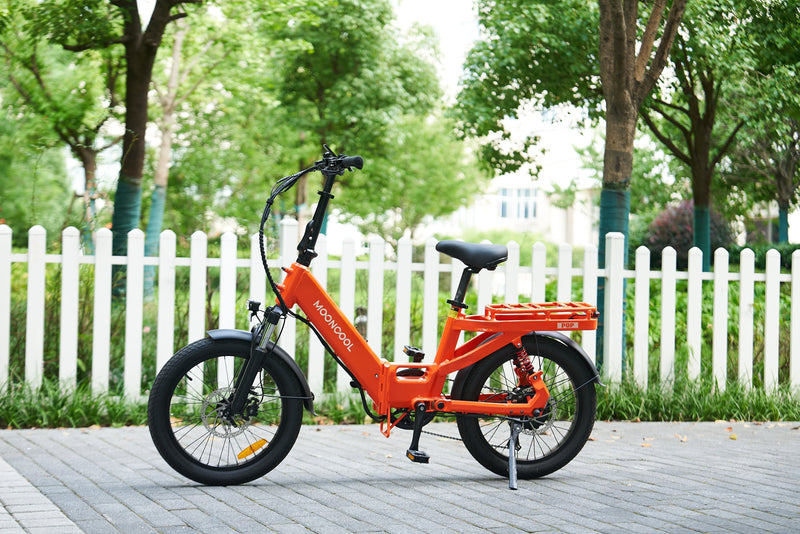
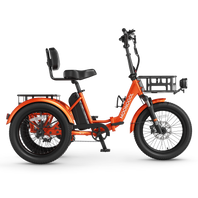
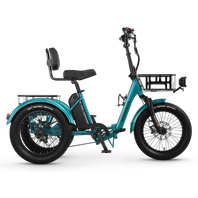
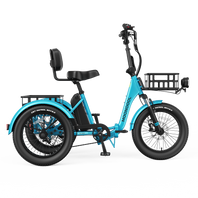
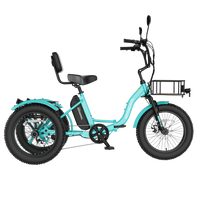
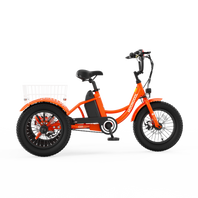
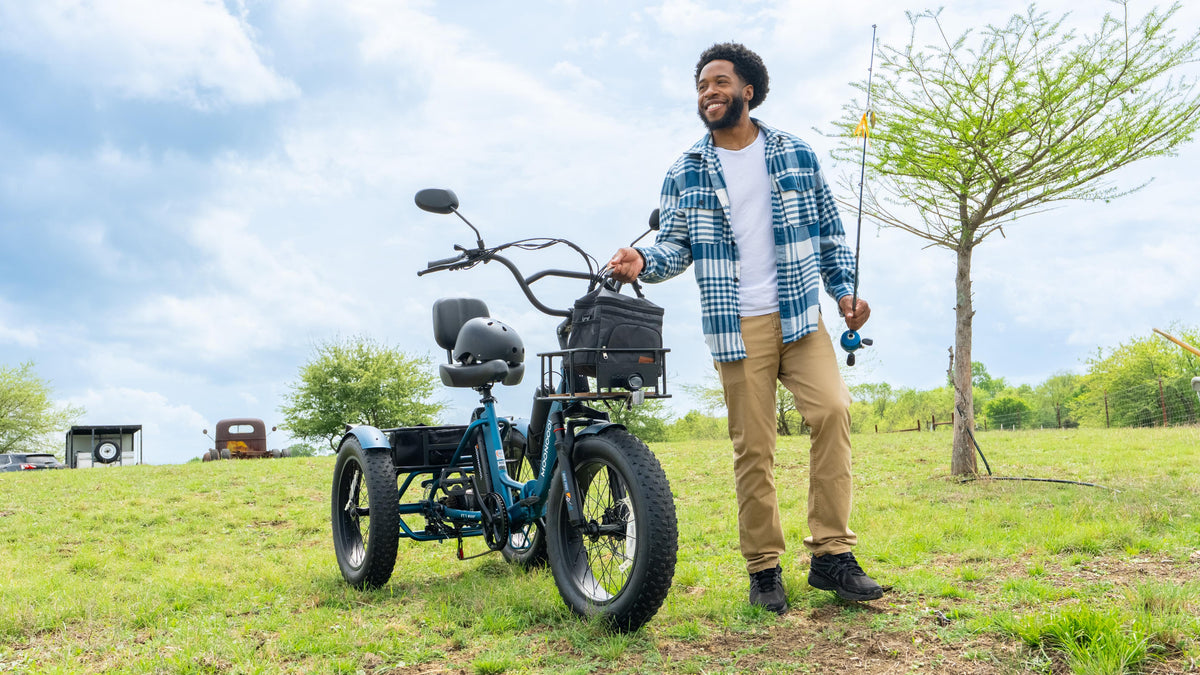
A fat tire electric trike is a three-wheeled electric trike that uses tires significantly wider than those on a standard model. On a regular electric trike, tires are typically 2.0 to 2.5 inches wide. On a fat tire trike, they’re usually 4.0 inches or more. This is the case with the Mooncool FT1, which comes standard with 20" x 4.0" tires.
Everything else about the FT1 works the same way as any other electric trike. It has a motor, a battery, pedal-assist modes, and a three-wheel design that provides stability. The tires are what set it apart.
How 4-Inch Tires Differ from Regular Tires
The most obvious difference is width, but they give you some great benefits.
A wider tire has a larger contact patch with the ground. A 4.0-inch tire puts significantly more rubber on the surface than a 2.0-inch tire. This is what gives fat tires their grip advantage on surfaces where a narrower tire would slip or lose traction.
Fat tires are also filled with lower air pressures than standard tires. A regular trike tire for road use would usually be inflated to 40-65 PSI. But a fat tire is typically inflated to 8-15 PSI. This lower pressure allows the tire to deform slightly when it hits a bump or rides over a rough surface. This extra give means the tire absorbs the impact and vibrations before they travel up through the frame and into the rider, causing discomfort. This is one of the reasons fat tire trikes tend to give a noticeably smoother ride, even without a full suspension system.
Why Wider Tires Provide Better Traction and Comfort
Fat tires improve traction and comfort at the same time. This is thanks to the combination of a larger contact patch and lower operating pressure.
On a loose surface such as gravel or packed dirt, a narrow tire tends to cut through the surface rather than sit on top of it. This reduces grip, potentially causing the wheel to slip or bounce unexpectedly.
The wider footprint and lower pressure of a fat tire spread the load over a larger surface area. This means the tire stays on top of loose surfaces such as gravel, mud, sand, or snow rather than digging in. The result is much more predictable and confident handling.
On the comfort side, the tire’s ability to deform slightly acts as a natural shock absorber. The extra volume in the tires soaks up every small bump, crack, or surface irregularity you come across. If you were riding a trike with regular thin tires, that shock would transmit directly to your hands and body. With a fat-tire electric trike, you can ride longer and arrive feeling noticeably less fatigued.

Common Road Conditions Where Fat Tires Are Useful
Fat tires are designed for riders who encounter a variety of conditions and want a trike that handles them all with confidence.
Gravel paths and unpaved trails are where the grip advantage is most obvious. Narrow tires struggle when loose gravel moves beneath them. Fat tires handle it well thanks to their wider contact patch and their ability to conform slightly to the surface. Packed dirt paths, nature reserve tracks, and canal towpaths all fall into this category.
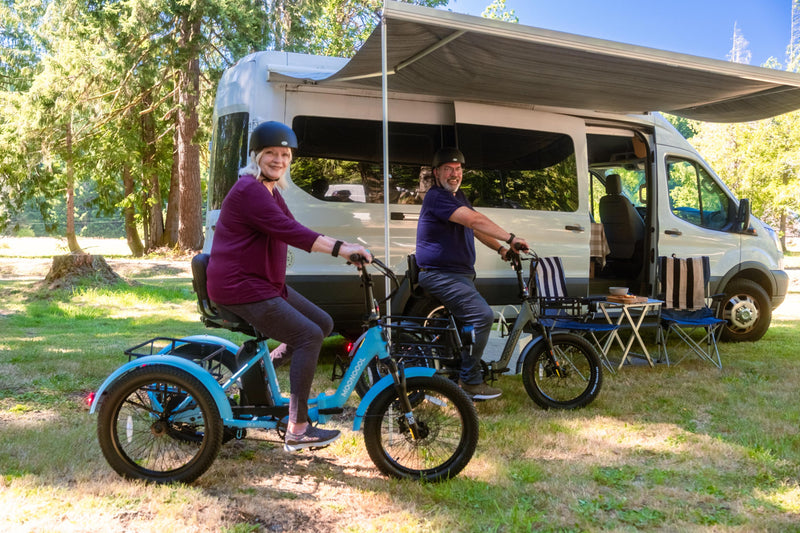
Grass and soft ground are also well-suited to fat tires. When riding on campsite terrain, in parks, and coastal access paths, you’ll often need to ride on softer ground. A narrow tire would sink in and lose momentum, but a fat tire distributes the weight more evenly and keeps the trike moving without bogging down.
You don’t need to ride on multiple surfaces to benefit from fat tires. There’s a good chance that you’ll ride your regular route when the roads are wet. The extra grip from fat tires instills confidence, as they are less likely to skid in wet conditions. The FT1’s 4.0 hybrid particle tires are specifically designed to disperse water and mud efficiently. This is due to a tread pattern that helps channel water and debris away from the contact patch.
Even imperfect urban roads, surfaces with potholes, uneven pavement, and uneven tarmac, are more comfortable on a fat tire than a standard one. The shock-absorbing effect of the low-pressure tire smooths out the small imperfections that are common on city and suburban roads.
Who Should Consider a Fat Tire Electric Trike?
As we’ve seen, fat tires are beneficial for many people, but they are not necessarily the right choice for everyone.
If you ride exclusively on smooth, properly maintained paths and roads, the traction and shock-absorption benefits of a fat tire trike are less relevant. A standard electric trike does that job well, and a fat tire model adds cost and weight without much practical return for that kind of riding.
If you regularly ride on surfaces other than smooth pavement, or if you want the flexibility to do so without buying a second trike, a fat-tire model makes a lot of sense. This includes recreational riders who use local nature reserves and canal paths, campers and outdoor enthusiasts, riders in areas with poor road surfaces, and anyone who wants to ride on the beach, through a park, or on a gravel track.
Older riders and anyone who values a smoother, more comfortable ride on any surface also benefit from fat tires. The natural cushioning effect of a low-pressure tire reduces the vibration and jolting that you get with narrow tires.
How the Mooncool FT1 Fits Everyday and Recreational Riding Needs
The FT1 is built for riders who don’t stay on one type of surface. It uses 20" x 4.0" fat tires on an alloy folding frame with a rear differential for stable cornering. The 500W motor with a 1092W peak provides enough power to handle mixed terrain easily, and the Shimano 7-speed gearing gives you extra control on inclines and varied ground.
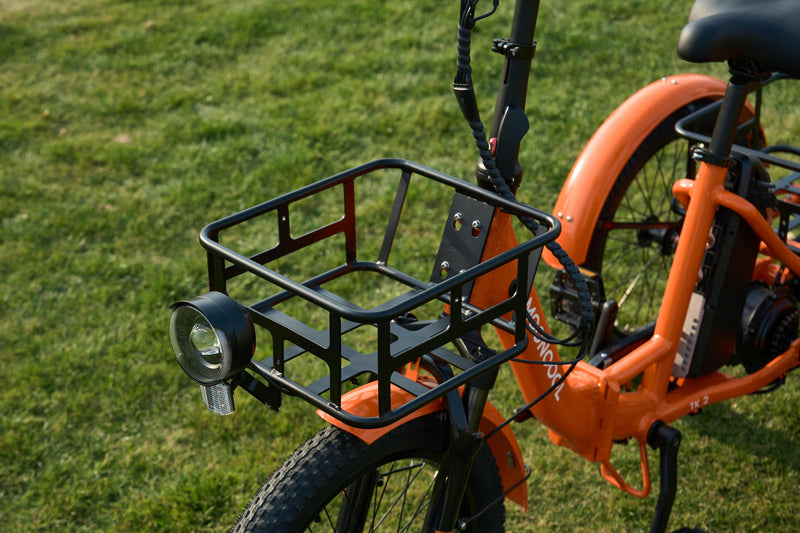
The 48V 14.5Ah battery gives you a range of 35 to 60 miles per charge. This is enough for a full day of recreational riding for most people, or a combination of errands and leisure trips. The 400 lb load capacity, front and rear baskets, fenders, and integrated lights are all included as standard.
The folding frame makes the FT1 practical to transport. It fits in the back of an SUV or a truck bed, so you can take it to a trail, a campsite, or a coastal path without needing a specialist rack.

Final Thoughts
Fat-tire electric trikes make sense for riders who want more grip, more comfort, and greater flexibility for riding over different surfaces. Understanding what fat-tires actually do makes it much easier to decide whether they are suitable for where you ride. Take a look at the Mooncool FT1 and see how it compares to the rest of the Mooncool electric trike lineup.